


Choosing the right packaging for your product in Australia depends on the product itself, its fragility, protection needs, brand presentation, sustainability requirements and budget. There's no single best packaging type. The right structure is whichever one balances all of those for what you're actually shipping.
Key Takeaways
- Start with the product's own fragility, weight, shape and shelf life before comparing box styles or materials.
- Some products need two structures working together, not one. Wine is the clearest example: a shipper for freight and a rigid box for presentation.
- Fragile or static-sensitive items, electronics especially, need cushioning shaped to the product, not a generic foam block.
- Corrugated box, cardboard box, rigid box (chipboard) and pulp mold insert each solve a different problem.
- Sustainability credentials increasingly factor into how Australian buyers evaluate packaging.
- Always test before you scale. Drop, compression and fit testing catch problems a screen never will.
Ask ten suppliers what the best box is for your product and you'll get ten different answers. That's because the right one depends on your product, not a general rule, and working it out usually comes down to the same handful of questions, often learned the hard way after a shipment turns up damaged or a batch gets rejected.
This guide covers the categories we actually work in for Australian brands: wine, electronics, pharmaceutical and medical, and retail or premium product lines, using four core structures applied differently depending on the product: corrugated box, cardboard box, rigid box (chipboard), and pulp mold insert. If you're looking for agricultural produce packaging, fruit or vegetable export cartons for example, this isn't the right guide, since that's not a category we work in.
01.What Should You Consider When Choosing Packaging?
There's no universal answer here. The right packaging balances several factors at once, and getting one right while ignoring the others still leads to problems. These three matter most before you start comparing suppliers.
1. Product Type and Characteristics
What you're packaging changes everything downstream. A wine bottle, an electronic component, a pharmaceutical product and a retail item all fail differently if the packaging is wrong, so the product's physical characteristics are where every decision should start.
| Product Characteristic | Packaging Consideration |
|---|---|
| Fragile | Cushioning and impact protection |
| Static-sensitive | Component-shaped cushioning, not generic foam |
| Heavy | Higher-strength materials |
| Needs precise fit | Sizing built to the product, not a standard box |
| Premium positioning | High-end finishes and presentation |
2. Level of Product Protection
Once you know what the product is, the next question is what it needs protecting from: impact, compression, moisture, static, or contamination. Most products only need two or three of these seriously addressed, not all of them.
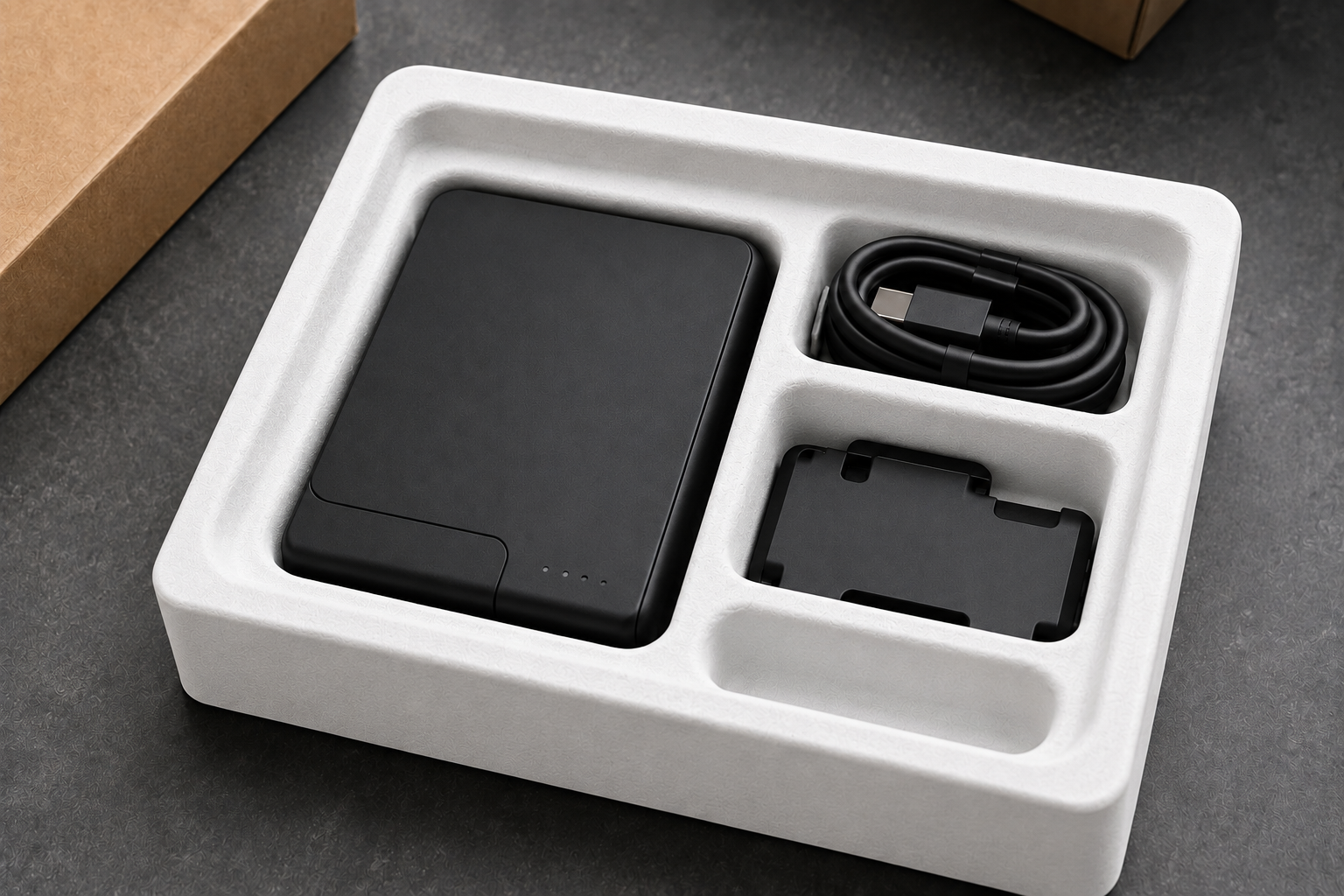
Electronic components are a good example of why this matters. They need protection from physical shock and from static-sensitive handling at the same time, which is why a pulp mold insert moulded to the exact shape of the component works better than a generic foam block. Our pulp mold uses a wet press process, giving a smoother, more finished surface than the rougher, eggshell-style dry press trays some buyers expect.
3. Packaging Material
Material comparisons usually read as a wall of adjectives. It's more useful to know what each one is actually for, and where it falls short.
Corrugated box
Cardboard box
Rigid box (chipboard)
Pulp mold insert

02.How Does Design Affect Your Choice?
Material is only half the decision. How the packaging is sized, structured and finished changes how well it performs and how it represents the brand.
Structure
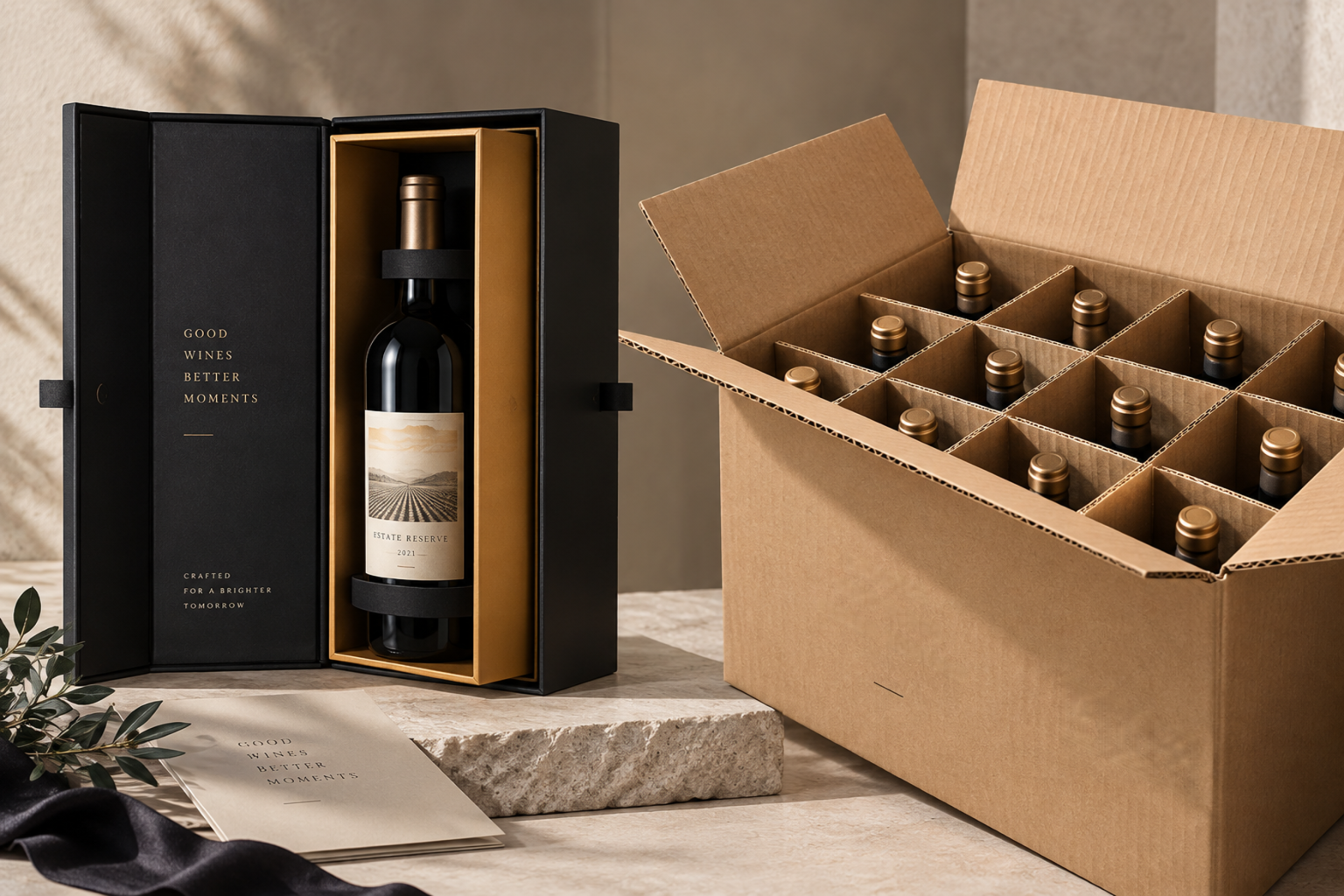
Sometimes the right structure is actually two structures working together. Wine is the clearest example of this: it usually needs a corrugated shipper to survive freight and handling, and a separate rigid box (chipboard) to look considered enough for a cellar door shelf or a gift box. Those two jobs rarely get solved by the same box.
03.How Do You Choose Sustainable Packaging?
Sustainability isn't a separate checkbox anymore. It's part of how packaging gets specified, and increasingly part of how buyers evaluate a supplier.
Material Sustainability
Look at whether the material is recyclable, whether it already contains recycled content, and whether it comes from a renewable source. Corrugated and chipboard both score well here.
Source of Material
Where the material comes from matters as much as what it's made of. PT Print is FSC (Forest Stewardship Council) certified, meaning our paper-based materials are sourced through ethical, responsibly managed forestry, not just recyclable in theory.
End of Life
Three questions matter more than a recyclable logo on the box: can the customer or client actually recycle it locally, does the local recycling infrastructure accept it, and is it easy to separate materials that are mixed together, like a plastic window on a paper box.
04.What Packaging Works Best for Different Products?
Once the framework above is clear, most products map fairly predictably onto a structure. This covers the categories we see most often from Australian brands.
| Product Category | Common Packaging Considerations |
|---|---|
| Wine | Freight-grade shipper plus a rigid presentation box, often with a pulp mold insert between them |
| Electronics | Impact protection, static-sensitive handling, pulp mold inserts moulded to the component |
| Pharmaceutical and medical | Clean room manufacturing, co-packing service, ISO 13485 certified |
| Retail and premium | Structural quality, print finish, unboxing feel |
| Lighter or custom-shaped products | Flexible cardboard structure, faster to customise |
These are the categories we specialise in. For agricultural produce packaging, such as fruit or vegetable export cartons, that's outside what we produce.
05.Common Packaging Mistakes We See
Using Generic Cushioning for Fragile or Static-Sensitive Items
A standard foam block rarely holds an irregular or static-sensitive component as securely as an insert moulded to its actual shape.
Expecting One Structure to Do Every Job
A box built for freight and a box built for shelf presentation are solving different problems. Trying to make one do both usually means compromising on one of them.
Locking In a Design Before Confirming It Can Be Made
A design that looks perfect on screen can turn out difficult or slow to produce at scale. Check feasibility with your supplier before the design is finalised, not after.
Claiming Sustainability Without a Real End-of-Life Plan
A recyclable label on the box doesn't mean much if the material can't actually be processed wherever it ends up being disposed of.
Skipping Testing Before Mass Production
This is the one we see most often, and it's covered properly in the next section.
06.How to Test Packaging Before Production
Test the packed box, not just the material, for drop, compression and fit before committing to a full production run.
"A box can feel sturdy in your hands and still fail under stacking if it wasn't tested against the load it's actually carrying."
something most buyers only find out once a pallet's been rejected at the warehouseA proper testing pass covers drop testing, compression testing, moisture testing where relevant, and product fit testing. Most of these can be done on a small pre-production batch before you commit to volume.
The sequence is always the same: build a prototype, test it, find where it fails, fix that, test again, then move to full production. Skipping straight from a design file to a mass run is where most of the packaging problems we see start.
07.Final Summary
Choosing the right packaging isn't about picking a material off a list. It starts with what the product actually needs, whether that's wine, electronics, pharmaceutical or retail, then moves through protection level, material and design, and sustainability requirements. Some products, wine especially, need two structures working together rather than one doing everything. Test the packed box before you scale, and most of the failure points covered here never show up in the first place.
Not sure which structure fits your product?
Tell us about your product, wine, electronics, pharmaceutical or retail, and we'll recommend a structure and material combination built around it.
Talk to Us About Your PackagingFAQs
What packaging works best for wine brands in Australia?
Rigid box, moulded pulp or corrugated box, depending on what the brand needs. Most wine brands actually need two structures working together: a corrugated shipper for freight and stacking, and a rigid box (chipboard) for cellar door presentation or gifting. A moulded pulp insert usually sits inside either to keep bottles separated.
How do you protect electronics with packaging?
A pulp mold insert moulded to the exact shape of the component handles this better than generic foam, since it holds the item in place and absorbs shock. We use a wet press process for a smoother, more finished surface.
What does pharmaceutical or medical packaging need to get right?
It depends on the specific item, whether that's a box, a leaflet or contract packing. Precise fit and clear, accurate print matter most. A box sized exactly to the product reduces movement during handling, and labelling needs to be treated as a requirement from the first draft, not a finishing step.
Should I use a rigid box or a cardboard box for retail packaging?
A rigid box (chipboard) suits premium retail and gifting, where the box itself carries brand weight and presence. A cardboard box, made from lighter art card, suits categories like skincare where a distinctive custom shape matters more than heavy structure.
Do you produce packaging for fruit or produce exporters?
No. We focus on structural and printed packaging for wine, electronics, pharmaceutical and retail brands, not agricultural produce packaging such as fruit or vegetable export cartons.
Is paper packaging always more sustainable than plastic?
Not automatically. It depends on how the material was produced and whether local recycling infrastructure can actually process it. The more useful question is what protects the product with the least material and a realistic end-of-life.