

7 min read
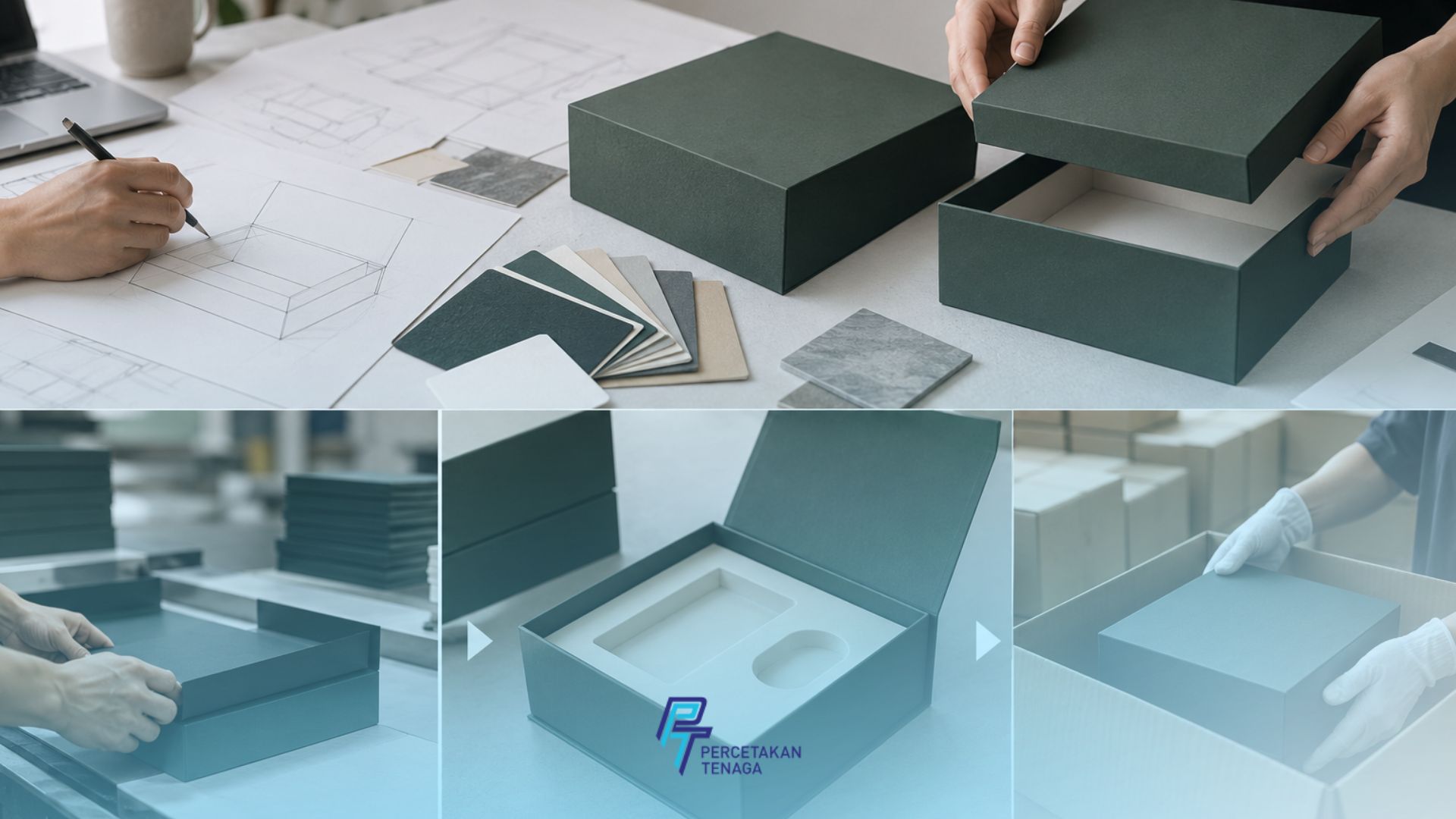
Custom packaging manufacturing in Australia follows a defined sequence: confirming specifications, testing product fit, designing, building a prototype, getting sign-off, then moving into mass production with checks along the way. Knowing what each stage actually involves helps you set a realistic timeline and spot a manufacturer who genuinely follows it.
Key Takeaways
- Specifications and product fit get confirmed before design starts, not the other way round.
- A physical prototype and customer sign-off happen before mass production begins, not after.
- Colour gets checked throughout a production run, not only once it's finished.
- PT Print manages design, prototyping and production together for custom packaging across Australia.
- Minimum order quantity starts at 5,000 units for boxes, with higher minimums for moulded pulp and blister card.
- Lead time typically runs 3 to 6 weeks, depending on how quickly specifications and design get locked in.
01.The Journey From Concept to Finished Packaging
Seven stages take a project from a customer's initial requirements through to finished, delivered packaging.
02.Getting the Brief Right: Specifications and Fit
The instinct is to jump straight into design. The process works better in reverse: the product and its requirements get locked in first, and design follows once that groundwork is solid.
Confirming Specifications
Size, material and any other requirement are agreed on before a single design element exists. This isn't a formality, it's the reference point everything else gets checked against. A vague or incomplete specification tends to resurface later, usually at the prototype stage, where it's harder to fix than it would have been here.
Testing Fit Before Anything Is Designed
The actual product then gets checked against those confirmed specifications, physically, not just on paper. This catches a mismatch while it's still a measurement problem rather than a finished design that needs rebuilding. Jumping straight to design without this step is a shortcut that tends to create more rework than it saves.
03.Turning a Confirmed Brief Into a Physical Sample
Design
Only once fit is confirmed does design start. Customers can supply finished artwork of their own, or work with our in-house design team to build it from the confirmed specifications. Because the structure is already validated by this point, design work isn't trying to solve two problems at once.
Prototype
A prototype is a physical object, built from the confirmed design, not a mockup viewed on a screen. It gives both sides something real to inspect: the fold, the feel, the finish. This is often where a design that looked correct as a flat file reveals a fold that doesn't sit right, or a fit tighter than the spec suggested.
04.Sign-Off and Moving Into Production
Approval
Nothing proceeds toward mass production until the physical prototype has been reviewed and signed off. This step exists because a design file, however correct it looks, doesn't always translate exactly into a finished, folded, printed structure.
Production and Colour Checks
Once signed off, the design goes into mass production. Colour gets checked as the run progresses, not just at the start or end, since it can drift slightly across a long batch if nobody's actively watching for it.
"A sample that looks right in your hand can still print inconsistently across a long run, if colour isn't being watched the whole way through, not checked once at the end."
the reason colour checks continue throughout a production run05.Delivery
Once production and its colour checks wrap up, the finished packaging is delivered. On paper, this is the final step, but it's really just the visible result of everything that happened earlier: specifications confirmed properly, fit tested before design, and a prototype genuinely approved rather than assumed.
06.One Manufacturer, or Several?
The seven stages above happen regardless of who's involved. What changes is who's responsible for each one, and how that plays out when something needs fixing.
| Aspect | One Manufacturer | Multiple Vendors |
|---|---|---|
| Handoff from design to production | One continuous process | Passed between separate companies at each stage |
| Accountability | A single point of contact | Unclear who's responsible when something's wrong |
| Prototype and approval | Built into the process | Often skipped or handled separately from production |
| Lead time | One predictable timeline | Delays at one vendor compound across the rest |
| Communication | One contact for the whole project | Coordinating with each vendor separately |
07.What to Expect: Timeline and Minimum Order Quantities
Lead time typically runs 3 to 6 weeks, though where a project lands in that range depends on how quickly specifications and design get confirmed, and whether it's a first run needing new tooling or a repeat order.
Minimum order quantity depends on the product. Our minimum order quantity starts at 5,000 units for boxes, with higher minimums for specialised products: 30,000 units and above for moulded pulp, and 10,000 units and above for blister card.
Questions Worth Asking Any Custom Packaging Manufacturer
- What's the minimum order quantity for my specific product type?
- Is a physical prototype included before mass production?
- How is colour monitored during a production run, not just checked at the end?
- Is design, prototyping and production handled in-house, or split across different vendors?
08.Final Summary
Custom packaging manufacturing follows a sequence for a reason: specifications and fit come first, design follows once fit is confirmed, a physical prototype and genuine sign-off happen before mass production, and colour gets watched throughout the run rather than checked only at the end. Understanding that sequence, and asking about it before committing to a manufacturer, is what turns a packaging project into something predictable rather than something that only reveals its problems once it's finished.
Starting a custom packaging project in Australia?
Tell us about your product, wine, electronics, pharmaceutical or retail, and we'll walk it through the full process with you, from specification to delivery.
Talk to Us About Your PackagingFAQs
How does custom packaging manufacturing actually work?
It follows a fixed sequence: confirming specifications and testing product fit, then design, a physical prototype, customer approval, mass production with colour checks, and delivery. Each stage exists to catch a problem before it moves further down the line.
Why does product fit get checked before the design stage?
Confirming fit against the specifications before any design work starts catches a mismatch while it's still just a measurement issue. Finding the same problem after artwork is finished means reworking a completed design instead of adjusting a spec sheet.
What's the minimum order quantity for custom packaging in Australia?
It depends on the product. Our minimum order quantity starts at 5,000 units for boxes, with higher minimums for specialised products, 30,000 units and above for moulded pulp, and 10,000 units and above for blister card.
Is it better to use one manufacturer for design, prototyping and production?
Generally, yes. When one manufacturer handles the whole sequence, there's a single point of accountability and no compounded delay from handoffs between separate vendors. PT Print manages design, prototyping and mass production together for custom packaging across Australia.