

Sustainable packaging in Australia means meeting a real, measurable standard, not applying a green label to whatever material happens to look eco-friendly. A recognised national framework sets out what that involves, covering recyclability, recycled content and reducing unnecessary single-use plastic. For most businesses, a fibre-based material, corrugated, cardboard or moulded pulp, is the most direct way to meet it.
Key Takeaways
- Sustainable packaging in Australia is measured against a recognised national framework, not something businesses get to define for themselves.
- That framework sets clear benchmarks: 100% reusable, recyclable or compostable packaging, 70% of plastic packaging recycled or composted, and 50% average recycled content.
- "Paper is sustainable, plastic isn't" oversimplifies the real question: what protects the product using the least material, with a realistic end-of-life.
- Fibre-based materials, corrugated, cardboard and moulded pulp, are recyclable by default and align well with those benchmarks.
- Moulded pulp, made from bamboo, bagasse and recycled fibre, is a genuine alternative to plastic and foam for cushioning and protective packaging.
- PT Print holds real third-party certifications, including FSC and ISO 14001, backing up what we say about sustainability with independent verification.
"Sustainable packaging" gets used loosely enough that it's stopped meaning much on its own. A box can carry a green leaf icon and still not be recyclable where it's actually used. A material can be technically recyclable and still end up in landfill because the infrastructure to process it doesn't exist locally. For Australian businesses, sustainability claims are increasingly measured against a real, national benchmark, not a marketing choice.
This guide sets out what that benchmark actually involves, and how to evaluate a material or a supplier against it properly, rather than taking a recyclable label at face value.
01.What "Sustainable Packaging" Actually Means in Australia
A recognised national framework sets out what sustainable packaging actually means in Australia, applying to all packaging made, used or sold in the country, not just packaging from businesses that opt in. Established in 2018, it sets out four measurable objectives.
- 100% of packaging to be reusable, recyclable or compostable
- 70% of plastic packaging to be recycled or composted
- 50% average recycled content across all packaging
- Phase-out of problematic and unnecessary single-use plastics
Beyond these four headline benchmarks, a broader set of sustainable packaging design principles covers the full lifecycle of a package, from material choice and resource efficiency through to transport, consumer disposal information and end-of-life impact.
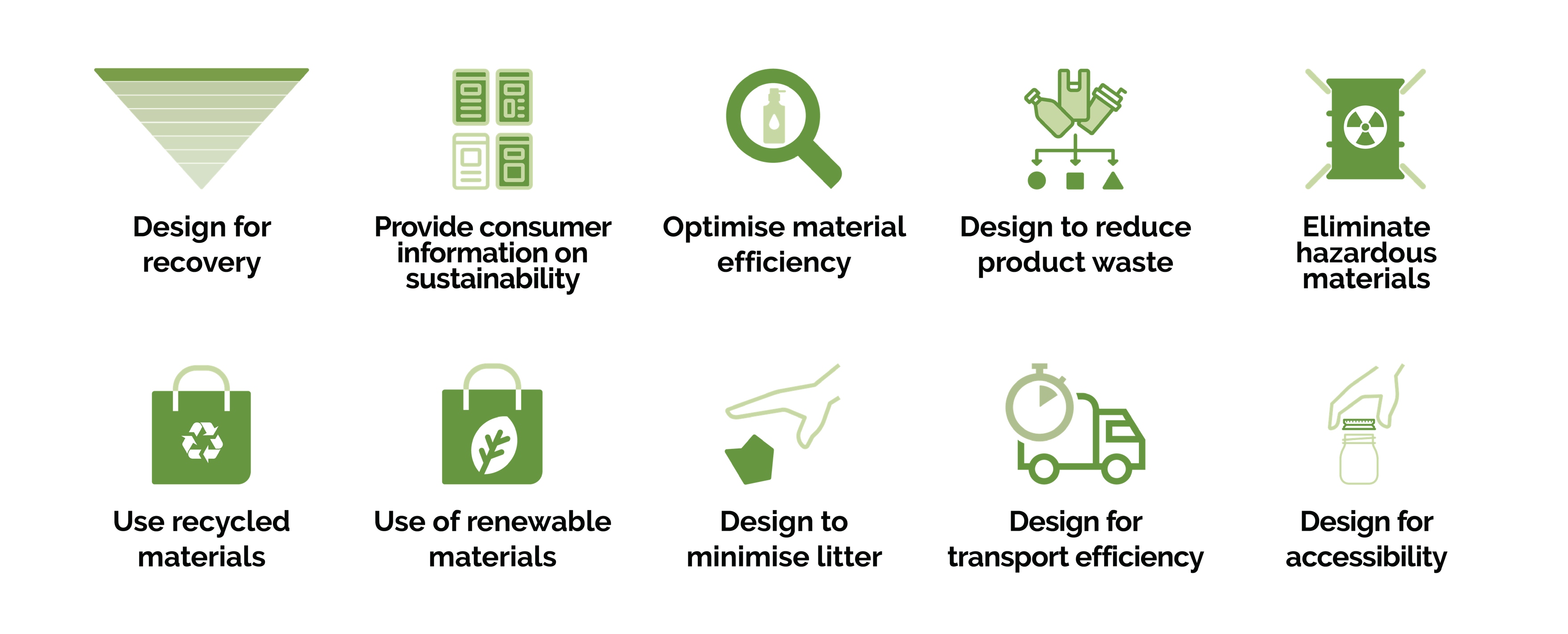
Design for Recovery
Design for Resource Efficiency
Restrict Hazardous Materials
Design for Recycled Content
Design for Transport Efficiency
Design for Consumer Information
Design for Accessibility
Design for Product Protection
Single-Use Plastic Phase-Out
Lifecycle Thinking
A review found these benchmarks won't be fully met within the original 2025 timeframe. Rather than being dropped, they continue beyond 2025 as Australia's ongoing standard for packaging outcomes, with a revised timeline still being established. In practice, this means the direction hasn't changed, packaging in Australia is still being measured against these four goals, even as the exact timeline shifts.
02.Recyclable Doesn't Automatically Mean Sustainable
A material being technically recyclable and a material actually getting recycled are two different things. Two questions matter more than a recyclable symbol on the box.
Can It Be Recycled Where It's Actually Used?
Local recycling infrastructure varies. A material that's recyclable in theory but not accepted by the collection systems available to your customers doesn't achieve much in practice.
Avoid "Green" Assumptions
"Paper is sustainable" and "plastic is unsustainable" are both oversimplified. The better question isn't which material sounds greener, it's which packaging solution protects the product using the least material, with a realistic end-of-life that actually happens, not one that's theoretically possible.
03.Our Sustainability Certifications
A sustainability claim is one thing, third-party certification is another. These are the certifications PT Print holds that relate directly to sustainable packaging, rather than a full list of every certification across our operations.
- FSC® (Forest Stewardship Council), confirming fibre-based materials are sourced from responsibly managed forests
- ISO 14001:2015, certified environmental management system
- Canon Green Procurement, meeting Canon's environmental supplier standards
- Sony Green Partner, meeting Sony's environmental partner requirements
04.A Practical Checklist for Evaluating Sustainable Packaging
Before accepting a sustainability claim about a material or a supplier, these questions cut through most of the marketing language.
- Is the material recyclable through infrastructure that actually exists where your customers are?
- Does the packaging use the least material needed to protect the product properly?
- Is the material easy to separate, or does it combine plastic and fibre in a way that's hard to recycle?
- Does the supplier point to a recognised national framework or real certifications, or just a general "eco-friendly" claim?
- Would the packaging still make sense if the green messaging were removed from the box?
"A recyclable label means little if the material can't actually be processed wherever the box ends up."
the gap between a technically recyclable material and one that actually gets recycled05.Final Summary
Sustainable packaging in Australia is measured against a real national framework, not a marketing claim a business gets to define on its own. Recyclability depends on local infrastructure and material separation as much as the material itself, and the most useful materials, corrugated, cardboard and moulded pulp, are fibre-based and recyclable by default. Moulded pulp in particular offers a genuine, fibre-based alternative wherever plastic or foam cushioning is still being used.
Looking to make your packaging genuinely more sustainable?
Tell us about your current packaging and we'll help you evaluate whether a fibre-based structure, including moulded pulp, could replace it without compromising protection.
Talk to Us About Sustainable PackagingFAQs
Is moulded pulp a sustainable packaging option?
Yes. Made from a blend of bamboo, bagasse and OCC (old corrugated containers) rather than virgin plastic, moulded pulp is fibre-based, recyclable, and a genuine alternative to plastic and polystyrene foam for cushioning and protective packaging.
Does PT Print hold any sustainability certifications?
Yes. PT Print holds FSC (Forest Stewardship Council) certification for responsibly sourced fibre and ISO 14001:2015 environmental management certification.
Is paper packaging always more sustainable than plastic?
Not automatically. It depends on how the material was produced and whether local recycling infrastructure can actually process it. The more useful question is what protects the product with the least material and a realistic end-of-life, not which material sounds greener.