


Choosing a packaging supplier in Australia comes down to four practical checks: whether they actually make your box type themselves, realistic minimum order quantities, honest lead times, and a production process you can see evidence of. The right supplier is the one who can prove all four, not just quote the lowest price.
Key Takeaways
- Start by confirming the supplier actually makes your box type themselves, rather than passing it to another company to produce.
- Ask for a specific MOQ per product type, not one blanket number. Ours starts at 5,000 units for boxes, with higher minimums for molded pulp and blister card.
- Ask for a realistic lead time range, not just a vague "it depends." Ours is ideally 3 to 6 weeks, though complexity can affect where in that range a project lands.
- A supplier who can show you their production process, or produce a sample, is worth more than one who only sends a quote.
- The lowest quote often hides a longer lead time or weaker quality control. Price alone is a poor filter.
- Experience in your specific product category, wine, electronics, pharmaceutical or retail, matters as much as general capability.
This guide sets out what we think buyers should actually check before committing to a packaging supplier in Australia: capabilities, minimum order quantity, lead time, and production process. Skip any of these and you find out the hard way, usually right when a launch timeline is already tight.
Do they actually make your box type themselves?
01.Start With What They Can Actually Produce
The first question is whether a supplier can actually produce what you need themselves. Plenty of packaging businesses offer a broader range on paper than what they physically manufacture, passing anything beyond their own equipment to another company. That's not necessarily an issue, but it's worth knowing upfront, since it puts another business between you and the people actually making your packaging.
What to Ask
- Can I see samples of similar work you've done before, ideally in my product category?
- Which structures do you actually manufacture yourselves: corrugated, cardboard, rigid, pulp mold?
Corrugated boxes, cardboard boxes, rigid boxes (chipboard) and pulp mold inserts are all produced directly by us, not made by another manufacturer on our behalf, so we can take you through the actual process rather than relaying what someone else told us. Still deciding which structure suits your product? Our guide on how to choose the right packaging breaks that down in more detail.
02.Minimum Order Quantity (MOQ)
MOQ derails more first orders than almost anything else on this list, usually because a buyer doesn't ask about it until a design is already finalised. It exists because tooling and setup costs need to be spread across enough units to make sense, and MOQ varies not just by supplier but by product type.
Our minimum order quantity starts at 5,000 units for boxes. Specialised products carry higher minimums: 30,000 units and above for molded pulp, and 10,000 units and above for blister card. We'd rather tell you that upfront than have it come up after you've already gone through design revisions.
If your first order is genuinely below that, say so upfront rather than finding out a supplier's minimum doesn't work for you partway through the process. A supplier worth working with will tell you plainly whether your volume fits their setup, rather than leaving it vague until the quote stage.
03.Lead Time: What to Actually Ask
Ask for a real range, not a vague "it depends" and not a single number that ignores complexity. A supplier who can explain what moves the timeline within that range is more trustworthy than one who just quotes a figure.
Tooling and die-line setup take time upfront. After that, the same structure can usually be reordered faster. A supplier who refuses to give any indication of timing, or who quotes one number regardless of what you're actually ordering, is either simplifying for convenience or hasn't thought it through, and either way you should ask for specifics.
Our lead time is ideally 3 to 6 weeks. Exactly where a project lands in that range depends on how quickly specifications and design are confirmed, and whether it's a first run needing new tooling or a repeat order. See our production process below for exactly how that timeline breaks down.
It's also worth asking any supplier what happens to a quoted timeline if artwork or specifications change mid-process, since that's usually where things quietly slip.
04.Production Process: What You Should Be Able to See
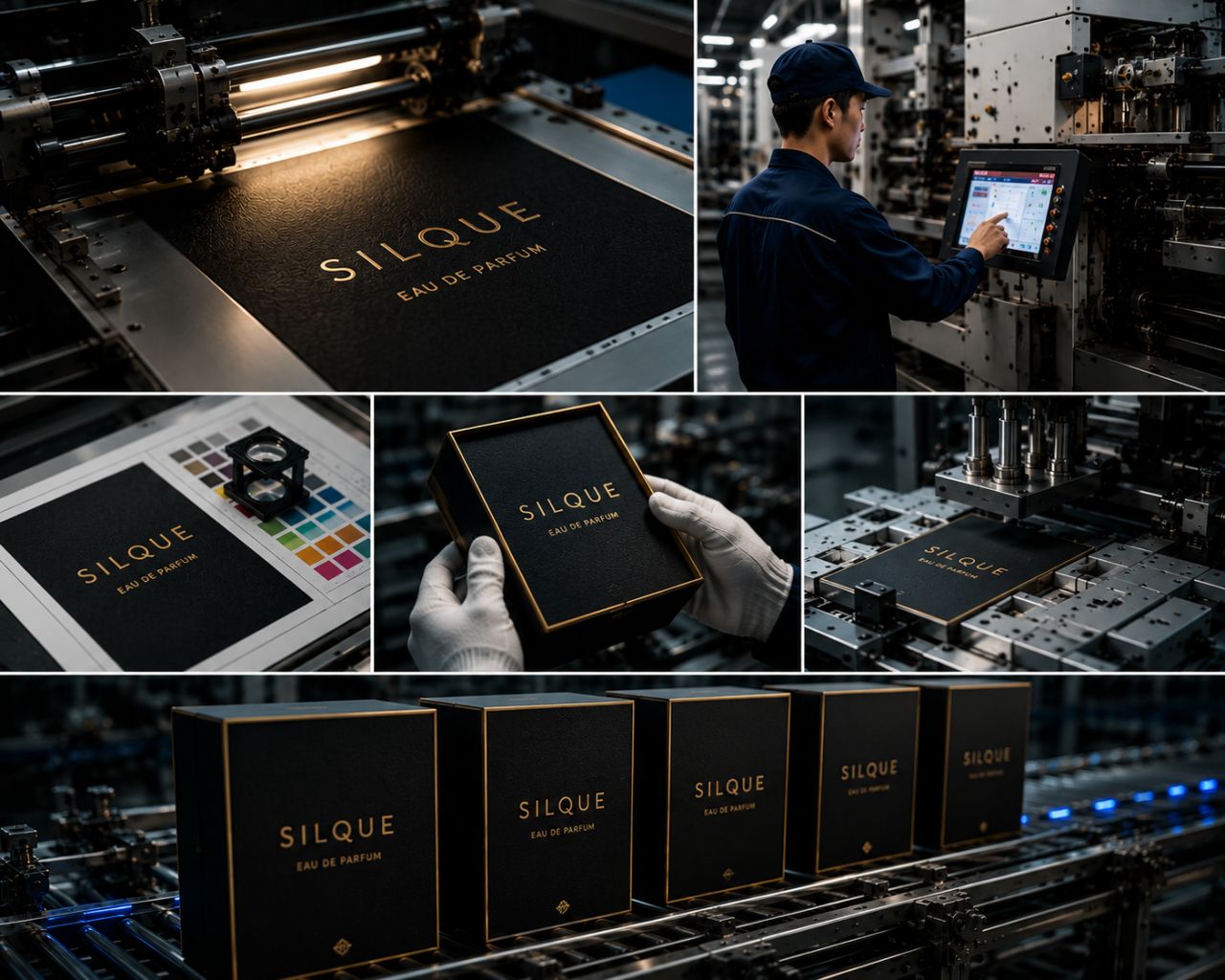
A quote tells you a price. It doesn't tell you how a box actually gets made, and that gap matters more than most buyers expect until something goes wrong with a run. Here's what that process actually looks like with us, step by step.
This sequence is also why lead time is ideally 3 to 6 weeks rather than a single fixed number. How quickly specifications and fit get confirmed, and how much design work is needed, both affect where in that range a project lands. What we can promise is that nothing goes to production until you've approved a tested prototype, not just a design file.
What a Transparent Supplier Should Offer
- Real evidence of the actual production line, not just photos of finished product
- A physical sample or pre-production prototype before a full run
- A clear answer on quality control checkpoints during production, not just a final inspection
- Willingness to explain what happens if a batch doesn't meet spec
If a supplier can't answer these plainly, or gets vague when asked, that's worth noting before you commit to anything at volume.
05.Why Category Experience Matters
Category experience means already knowing what a product needs, not learning it on your project. Wine needs a shipper and a presentation box working together. Electronics need cushioning shaped to the part, not generic foam. Pharmaceutical products need precise fit and labelling accuracy with no room for error.
Ask a prospective supplier directly whether they've worked in your specific category before, and ask to see examples, not just a general product list.
We've worked across wine, electronics, pharmaceutical and retail categories, which is why we can point to real examples rather than asking you to take our word for it. Ask any supplier for the same before you commit.
06.Final Summary
Choosing a packaging supplier comes down to four checks, in order: can they actually produce what you need themselves, does their minimum order quantity realistically fit your volume, are their lead times honest and specific rather than vague, and can they show you their production process and relevant category experience rather than just quoting a price. A supplier who answers all four plainly is worth more than the lowest number on a quote sheet.
Evaluating packaging suppliers right now?
Ask us the same four questions from this guide. We produce corrugated, cardboard, rigid box and pulp mold packaging ourselves, and we're happy to show you exactly how it's made before you commit to anything.
Talk to Us About Your PackagingFAQs
What should I look for when choosing a packaging supplier in Australia?
Four things matter most: whether they actually make your box type themselves, realistic minimum order quantities, honest lead times, and clear visibility into how the product actually gets made.
What's a typical MOQ for custom packaging?
It varies by supplier and by product type. At PT Print, our minimum order quantity starts at 5,000 units for boxes, with higher minimums for specialised products, 30,000 units and above for molded pulp, and 10,000 units and above for blister card. Always ask any supplier for their specific number per product rather than assuming one figure applies everywhere.
How long does custom packaging take to produce?
Lead time is ideally 3 to 6 weeks, though the exact timing depends on the project, how quickly specifications and design are confirmed, and whether it's a first run needing new tooling or a repeat order.
Do I need my own design, or can the supplier help with that?
Either works. We start by confirming your specifications and product fit, then move into design, whether that's your own finished artwork or built with our own design team. From there, we produce a physical prototype and go through approval before anything goes into production.
Why does experience in my product category matter when choosing a supplier?
A supplier who mostly produces generic retail boxes may not have thought through what a wine brand needs, or how an electronic component should be cushioned, or what precise fit a pharmaceutical product requires. Ask a prospective supplier whether they've worked in your specific category before, and ask to see examples.